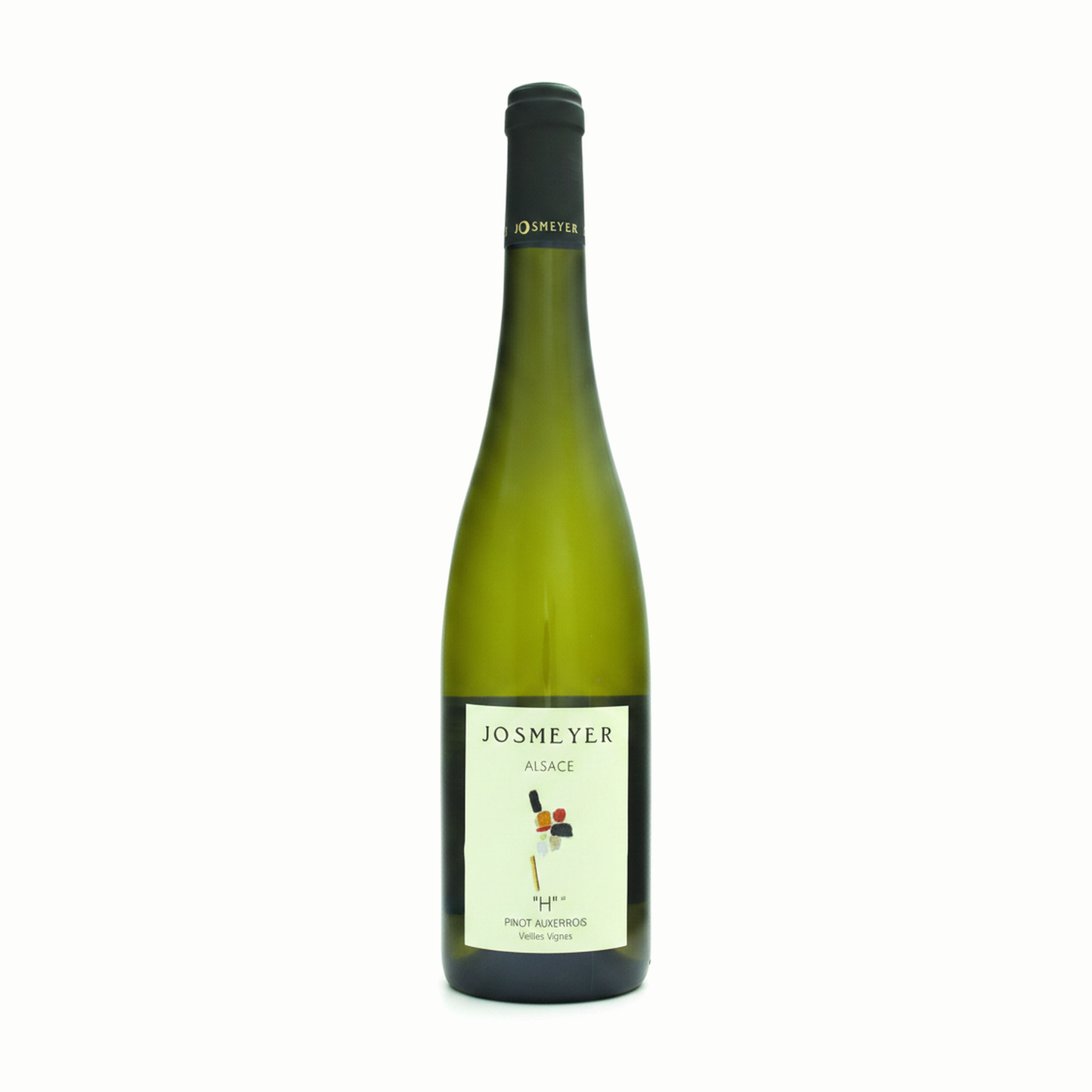
Pinot Auxerrois " H " Old Vines 2022
Pinot Auxerrois " H " Old Vines 2022
Couldn't load pickup availability
This is a wine of great density that will need time and will ennoble with age. Fermentations are often long for this wine, where in its youth, fruit and stone are found on the nose.
These are tender sensations like mirabelle plum or apricot, accompanied by a chiseled minerality and a great salinity. The palate is fleshy and chalky at the same time. Fruit, salt, and mineral notes intertwine in its finish, which features long bitter undertones. This particular imprint fiercely links it to the calcareous soil of Hengst. But it is with evolution, after 8 to 10 years, that the evidence is there. The patina of the nose evolves towards soft bark, floral honey with creamy and saline touches at the same time. There is a restraint and poise in the bearing of this wine, which surrounds itself with light, salt crystals, stony smells, and thunderbolts.
Terroir
Terroir
This Pinot Auxerrois comes from two plots located close to each other, in the heart of the Hengst. This Grand Cru, facing South - South East, culminates at 360 meters and is located in the commune of Wintzenheim.
The total area is 53 hectares. The Hengst terroir consists of brown calcareous, sandy, and clayey soils associated with Oligocene conglomerates. This stony soil is made up of Muschelkalk limestone intertwined with clay. It is a powerful wine-growing soil that warms up quickly in spring. Rooting is favored by the stony structure, and it has a water reserve thanks to the conglomerates.
Grass cover on every other row. Light plowing.
Winemaking
Winemaking
Harvesting is 100% manual.
Our approach remains traditional. The grapes are pressed whole for approximately 7 hours in our pneumatic presses. Debourbage is natural. Fermentation starts spontaneously with ambient yeasts in a century-old foudre.
This is followed by aging on fine lees for several months, until bottling, which usually takes place in July. Before bottling, the wine is filtered. It can be re-adjusted with sulfur, if necessary, at that time.
Tasting and Pairings
Tasting and Pairings
This is a wine of great density that will need time and will become nobler with age. Fermentations are often long for this wine, which, in its youth, reveals fruit and pit on the nose.
These are tender sensations like mirabelle plum or apricot, accompanied by a chiseled minerality and great salinity. The palate is both fleshy and chalky. Fruit coexists with salt and mineral in its finish, with long bitter notes. This particular imprint fiercely links it to the calcareous soil of Hengst. But it is with evolution, after 8 to 10 years, that the evidence is clear. The patina of the nose evolves towards tender bark, floral honey with creamy and saline touches. There is a restraint and poise in the bearing of this wine, which is surrounded by light, salt crystals, stony scents, and oak barrels.
In its youth, this wine will elegantly accompany fine and delicate seafood such as scallops. After 7 years of evolution, a creamy poultry dish, a porcini mushroom risotto, or vol-au-vents will suit it perfectly. After about fifteen years, the tender flesh of a lobster or, in a different vein, a farm-produced Reblochon cheese will flourish alongside it.
Ideal temperature
12° C