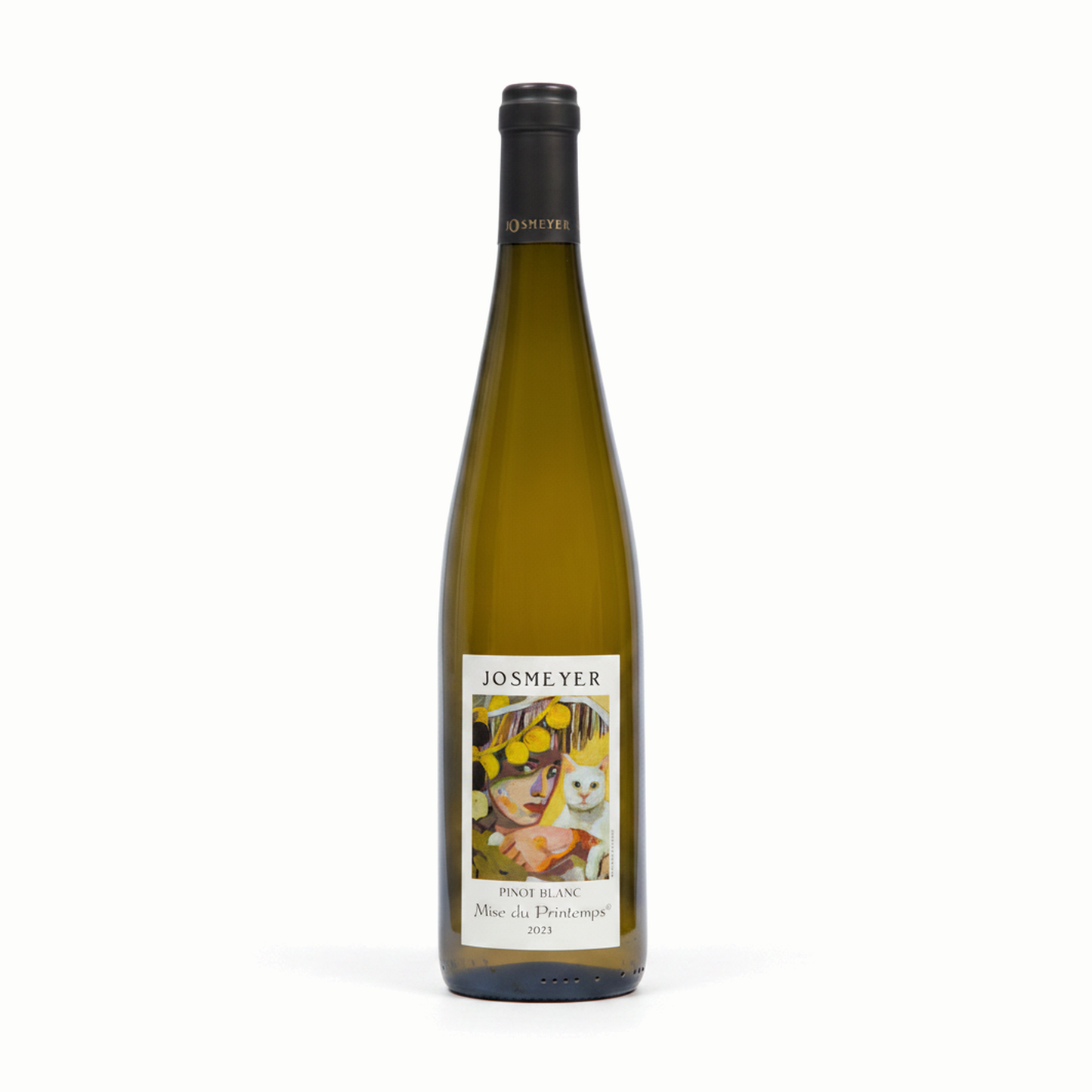
Pinot Blanc Spring Release 2025
Pinot Blanc Spring Release 2025
Couldn't load pickup availability
La Mise du Printemps is above all a dream of light, a sweetness contained in the fresh March breeze, a surge of life, the plant world reborn and throbbing under the first rays of the timid sun. Thus, depending on the vintage, this dry wine will be appealing and delicate on the nose, with aromas of white flowers, yellow peaches in warm vintages or notes of citrus zest with iodized touches in a cooler year.
The elegant and digestible palate, supported by a supple but firm acidity, structures the fruit and flower that develop harmoniously. A fine salinity accompanies the body, which evolves gracefully after a few minutes of aeration.
Terroir
Terroir
Around twenty plots, ranging from the northern slopes of the Grand Cru Hengst (marl-limestone soil rich in iron from the Rotenberg) to the alluvial and gravelly soils located on the plain around the commune of Wintzenheim, make up this emblematic cuvée.
Sowing one row in two. Light ploughing.
Winemaking
Winemaking
The harvest is 100% manual.
Our approach remains traditional. The grapes are pressed whole for approximately 6 hours in our pneumatic presses. Cold settling is natural. Fermentation starts spontaneously with ambient yeasts in our century-old vats. It is followed by aging on fine lees for several months, until bottling, which usually takes place as soon as spring arrives.
Before bottling, the wine is filtered. Sulfur can be adjusted, if necessary, at this point.
Tasting and Pairings
Tasting and Pairings
La Mise du Printemps is above all a dream of light, a sweetness contained in the cool March breeze, a surge of life, the plant world reborn and throbbing under the first rays of the timid sun. Thus, depending on the vintage, this dry wine will be delicate and dainty on the nose, with hints of white flowers and yellow peaches in warmer vintages, or notes of citrus zest with iodized touches in cooler years.
The elegant and digestible palate, supported by a supple but firm acidity, structures the fruit and flower which develop harmoniously. A fine salinity accompanies the body which evolves gracefully after a few minutes of aeration.
This wine will delicately accompany asparagus, spring vegetables, fish cooked in olive oil, dinner aperitifs, and other toasts and antipasti.
Ideal temperature
10° C